
If you’re trying to figure out how to lose belly fat naturally at home, it’s easy to become overwhelmed by conflicting advice. Search online and you’ll find promises about special foods, intense abdominal workouts, detox drinks, supplements, and quick seven-day transformations.
Most of those promises miss the bigger picture.
You cannot tell your body to remove fat from one specific area first. Instead, reducing abdominal fat generally involves improving your overall body composition through a combination of nutrition, physical activity, sleep, stress management, and consistent daily habits.
The good news is that you don’t need an expensive gym membership to get started. A comfortable pair of walking shoes, some open space at home, nutritious foods, and a realistic plan can provide a strong foundation.
This guide explains practical ways to support healthy fat loss at home without extreme dieting or unrealistic promises. It is designed for adults in the United States who want simple strategies that can fit around work, family responsibilities, and everyday life.
Can You Lose Belly Fat Naturally at Home?
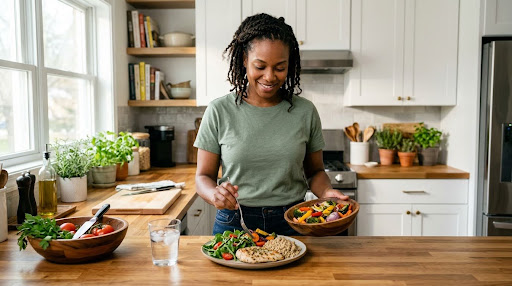
Yes, home-based lifestyle changes can support overall fat loss.
Your body does not require a commercial gym to become more active. Walking around your neighborhood, climbing stairs, performing bodyweight exercises, following an indoor workout, or using resistance bands can all contribute to a more active lifestyle.
Nutrition also plays an important role. Instead of searching for a single food that supposedly burns abdominal fat, build your meals around foods that provide protein, fiber, vitamins, minerals, and other nutrients.
A practical home-based approach may include:
- Eating mostly nutrient-rich foods
- Watching portion sizes
- Choosing water more often than sugary beverages
- Eating adequate protein
- Increasing fiber gradually
- Walking regularly
- Performing strength exercises
- Adding enjoyable cardiovascular activity
- Getting sufficient sleep
- Finding healthier ways to handle stress
- Tracking progress over time
You don’t need to change everything in one day. Starting with two or three manageable habits can make your routine easier to maintain.
Why Abdominal Fat Matters?
Some fat around the stomach is completely normal. However, excess abdominal fat can be associated with health risks.
One type of abdominal fat is called visceral fat. Unlike fat located directly beneath the skin, visceral fat is stored deeper within the abdomen around internal organs.
The amount and distribution of body fat can be influenced by many factors, including:
- Genetics
- Age
- Hormonal changes
- Physical activity
- Eating patterns
- Sleep
- Stress
- Overall body composition
Because people naturally have different body shapes, comparing your waist or stomach with another person’s isn’t a reliable way to judge your health.
A better approach is to concentrate on behaviors you can control, such as eating nutritious meals, staying active, sleeping well, and maintaining a healthy routine.
Can You Target Belly Fat With Exercise?
This is one of the most important things to understand before starting.
Exercises such as crunches, sit-ups, planks, leg raises, and bicycle crunches can strengthen your abdominal muscles. However, performing more abdominal exercises does not mean your body will specifically remove fat from your stomach.
Your body decides where stored fat is used based on several biological factors.
That means there isn’t one special home workout for belly fat that can selectively melt abdominal fat.
Instead, think about your fitness routine as a complete system.
A balanced program can combine:
- Walking
- Strength training
- Cardiovascular exercise
- Core exercises
- Everyday movement
Core exercises are still valuable. They can help develop abdominal strength and improve stability. They simply shouldn’t be treated as a magic solution for removing stomach fat.
Start With Your Eating Habits
If you’re learning how to reduce belly fat, nutrition deserves considerable attention.
You don’t need to eliminate carbohydrates, follow a juice cleanse, or survive on tiny meals. A better strategy is to create meals that are satisfying and nutrient-dense.
For many people, a useful starting point is to build meals around:
Protein
Examples include:
- Eggs
- Chicken
- Turkey
- Fish
- Seafood
- Greek yogurt
- Cottage cheese
- Beans
- Lentils
- Tofu
- Tempeh
Vegetables
Try adding a variety of:
- Spinach
- Broccoli
- Carrots
- Bell peppers
- Tomatoes
- Green beans
- Brussels sprouts
- Leafy greens
High-Fiber Carbohydrates
Examples include:
- Oatmeal
- Brown rice
- Potatoes
- Sweet potatoes
- Beans
- Lentils
- Quinoa
- Whole-grain bread
- Whole-grain pasta
Fruits
Good everyday choices can include:
- Apples
- Oranges
- Bananas
- Berries
- Pears
- Grapes
- Melons
Healthy Fats
Consider moderate portions of:
- Avocado
- Almonds
- Walnuts
- Chia seeds
- Flaxseeds
- Olive oil
- Natural nut butter
- Fatty fish
The goal isn’t to create a perfect meal every time. The goal is to make nutritious choices more often.
Prioritize Protein at Meals
Protein is useful when you’re working toward healthier weight management because it helps maintain muscle and can contribute to feelings of fullness.
Rather than consuming most of your protein in one meal, try spreading protein-containing foods throughout the day.
For example:
Breakfast: Eggs with whole-grain toast and fruit
Lunch: Grilled chicken salad with beans and vegetables
Snack: Plain Greek yogurt with berries
Dinner: Baked salmon with vegetables and a baked potato
Plant-based eaters have plenty of options as well. Lentils, black beans, chickpeas, tofu, tempeh, and edamame can provide protein while adding variety to meals.
Individual protein requirements differ, so people with specific dietary needs may benefit from personalized guidance from a registered dietitian or other qualified healthcare professional.
Add More Fiber to Your Diet
Fiber-rich foods can help make meals more satisfying and support digestive health.
Instead of depending on processed products marketed as “high fiber,” start with naturally fiber-rich foods.
Try incorporating:
- Oats
- Beans
- Lentils
- Apples
- Pears
- Berries
- Broccoli
- Brussels sprouts
- Whole grains
- Chia seeds
- Flaxseeds
- Nuts and seeds
If your current diet contains little fiber, increase it gradually rather than making a dramatic overnight change. Drinking enough fluids is also important.
A simple change might be adding berries and chia seeds to oatmeal or including beans and vegetables in a lunch bowl.
Small improvements become more meaningful when they are repeated consistently.
Don’t Automatically Blame Carbohydrates
Carbohydrates are often treated as the enemy in weight-loss discussions, but that oversimplifies nutrition.
Foods such as oatmeal, fruit, beans, potatoes, sweet potatoes, and whole grains can provide carbohydrates along with important nutrients.
Rather than eliminating carbohydrates entirely, consider the quality and portion of the foods you’re choosing.
For example, a meal containing grilled chicken, roasted vegetables, and a moderate serving of brown rice can be part of a balanced eating pattern.
You don’t have to fear an entire food group to make progress.
Pay Attention to Sugary Beverages
One of the easiest dietary changes for many people is reducing beverages containing added sugar.
Common examples include:
- Regular soda
- Sweet tea
- Sugar-sweetened coffee
- Energy drinks
- Some fruit drinks
- Sweetened sports drinks
Liquid calories can be surprisingly easy to consume because beverages may not create the same sense of fullness as a meal.
For everyday hydration, make water your primary choice.
You can also use:
- Unsweetened tea
- Sparkling water
- Water with lemon
- Water with lime
- Other low- or no-calorie beverages
If you currently drink several sugary beverages each day, start gradually. Replacing one drink with water is still a useful step.
Use a Simple Plate Method
You don’t necessarily need a food scale to begin creating more balanced meals.
A simple visual method is to make a large portion of your plate vegetables and other non-starchy produce, add a protein source, and include a reasonable serving of carbohydrate-rich food.
For example, dinner might contain:
- Roasted broccoli and peppers
- Grilled chicken
- Brown rice
- A small amount of avocado
This type of meal can provide protein, fiber, carbohydrates, and healthy fats without requiring complicated recipes.
Remember that individual calorie and nutrition requirements differ.
Be Careful With Highly Processed Foods
You don’t need to completely ban pizza, cookies, chips, desserts, or other foods you enjoy.
However, eating large amounts of highly processed, calorie-dense foods on a regular basis can make it more difficult to manage your overall energy intake.
Instead of trying to be perfect, consider making nutritious foods the foundation of your diet while allowing occasional foods you enjoy.
A realistic eating pattern might include:
- More vegetables
- More fruit
- Adequate protein
- Whole grains
- Beans and lentils
- Reasonable portions
- Fewer sugary drinks
- Fewer highly processed snacks
Healthy eating should be practical enough to continue beyond a short-term diet.
Walking Is an Excellent Place to Start

You don’t need to run for an hour to become more active.
Walking is accessible, inexpensive, and easy to adapt to different fitness levels.
You can walk:
- Around your neighborhood
- At a local park
- On a treadmill
- Around your home
- During a work break
- While talking on the phone
- After meals
If you have a sedentary job, short walking breaks can be particularly useful for increasing daily movement.
For example, you might begin with a 10- to 15-minute walk after one meal each day. If that feels manageable, gradually add more time or another walking session.
The best walking routine is one you can actually maintain.
Strength Training at Home
Strength training can complement walking and other forms of cardio.
You can begin without a gym using bodyweight movements.
Bodyweight Squats
Stand with your feet at a comfortable width. Push your hips backward and bend your knees while keeping your chest comfortably lifted. Lower only as far as you can control, then return to standing.
If you need support, perform the movement near a sturdy chair.
Glute Bridges
Lie on your back with your knees bent and feet supported on the floor. Raise your hips in a controlled manner, pause briefly, and lower them again.
Wall Push-Ups
Stand facing a wall and place your hands against it. Bend your elbows to move your chest toward the wall, then press yourself away.
This can be a useful starting point before progressing to an incline or floor push-up.
Supported Lunges
Lunges can work several muscles in the lower body. Hold a sturdy surface if you need assistance with balance and use a comfortable range of motion.
If a movement produces sharp or persistent pain, stop and consider seeking professional advice.
Don’t Forget Your Core
Core exercises can strengthen muscles around the abdomen, hips, and lower back.
Options include:
- Planks
- Side planks
- Bird dogs
- Dead bugs
- Glute bridges
- Modified mountain climbers
These exercises can be valuable for strength and stability.
However, remember the distinction:
Core training strengthens your muscles; it does not specifically determine where your body loses stored fat.
For that reason, combine core exercises with full-body activity and healthy nutrition.
Cardio You Can Do Indoors
If outdoor exercise isn’t convenient, you can still raise your activity level at home.
Try:
- Marching in place
- Dancing
- Step-ups
- Indoor walking
- Low-impact aerobics
- Follow-along cardio sessions
- Jumping jacks if appropriate for your fitness level
Start with a comfortable intensity.
A workout doesn’t need to leave you completely exhausted to be worthwhile.
If you’re new to exercise, gradually increase duration and intensity rather than attempting an advanced workout immediately.
Add Resistance Bands or Dumbbells
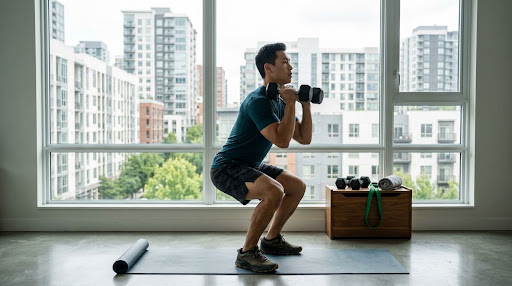
Once basic bodyweight exercises become comfortable, resistance bands or light dumbbells can provide additional training options.
Exercises may include:
- Rows
- Shoulder presses
- Biceps curls
- Squats
- Romanian deadlifts
- Chest presses
Focus on controlled technique before increasing resistance.
If you’re unfamiliar with strength training, learning proper movement from a qualified fitness professional can help you exercise more safely.
A Beginner-Friendly Home Workout
If you want a simple routine, try exercising two or three times per week.
Warm-Up
Spend about five minutes performing easy movements such as:
- Walking in place
- Arm circles
- Gentle squats
- Easy marching
Main Routine
Squats: 8–12 repetitions
Wall or incline push-ups: 8–12 repetitions
Glute bridges: 10–15 repetitions
Bird dogs: 6–10 repetitions per side
Supported lunges or split squats: 6–10 repetitions per side
Rest whenever necessary.
Start with one round. If the routine becomes comfortable, gradually work toward two or more rounds.
The objective is progression over time, not pushing yourself to exhaustion during the first week.
A Simple 7-Day Activity Schedule
You can adapt the following schedule to your fitness level.
Monday
Brisk walk + short strength session
Tuesday
Easy walk + mobility or stretching
Wednesday
Home strength workout
Thursday
Light walking or another enjoyable activity
Friday
Strength training + short walk
Saturday
Longer recreational activity such as hiking, cycling, walking, or dancing
Sunday
Rest or gentle mobility
You don’t have to follow this schedule exactly. Your routine should fit your work schedule, family responsibilities, fitness level, and personal preferences.
Everyday Movement Counts Too
Exercise isn’t limited to formal workouts.
Activities throughout the day can increase your overall movement.
Consider:
- Taking stairs when practical
- Walking during phone calls
- Doing household chores
- Gardening
- Playing actively with children
- Walking to nearby destinations when appropriate
- Standing up regularly during long periods of sitting
If you spend much of the day at a desk, setting reminders to stand and move can help break up prolonged sitting.
These actions may seem small, but they can become useful parts of an active lifestyle.
Sleep and Healthy Weight Management
Sleep is often overlooked when people focus on weight loss.
Most adults benefit from getting about seven to nine hours of sleep each night, though sleep needs can differ from person to person.
Poor or insufficient sleep can affect appetite, energy, mood, and your ability to maintain healthy habits.
Try creating a consistent sleep routine.
Helpful habits may include:
- Going to bed around the same time
- Waking at a consistent time
- Keeping your bedroom comfortable and dark
- Reducing stimulating screen use before bed
- Avoiding large meals immediately before sleeping
- Avoid caffeine later in the day if you notice it disrupts your sleep.
Better sleep won’t directly burn stomach fat, but it can make it easier to maintain the behaviors that support healthy weight management.
Find Healthier Ways to Manage Stress
Stress is part of modern life, particularly when you’re balancing work, family, finances, and other responsibilities.
For some people, stress can make healthy routines harder to maintain. They may eat for reasons other than physical hunger, sleep poorly, skip exercise, or rely more heavily on convenience foods.
You can’t eliminate every source of stress, but you can experiment with healthier ways to respond.
Try:
- Walking outdoors
- Deep breathing
- Meditation
- Journaling
- Reading
- Listening to music
- Spending time with friends
- Practicing a hobby
- Taking short breaks during demanding days
There isn’t one perfect stress-management technique. Choose something realistic enough to use regularly.
Drink Enough Water
Water supports normal body functions and is particularly important when you’re physically active.
Keep hydration simple.
You can:
- Carry a reusable water bottle
- Drink water with meals
- Have water before and after exercise
- Choose water instead of sugary beverages
- Keep water available while working
Your individual fluid needs depend on factors such as activity, climate, body size, diet, and other circumstances.
You don’t need to rely on special “fat-burning” drinks.
Practice Portion Awareness
Even nutritious foods contain calories, so portions still matter when you’re trying to manage body weight.
You don’t necessarily need to measure everything forever.
Instead, become familiar with reasonable portions.
One simple visual approach is:
Protein: approximately the size of your palm
Carbohydrates: approximately the size of your fist
Vegetables: a generous portion
Healthy fats: a smaller serving
These are general visual guides rather than medical requirements.
Your nutritional needs may be different depending on your age, body size, activity level, health status, and goals.
Slow Down During Meals
Eating quickly can make it harder to notice when you’re becoming satisfied.
Try making meals more intentional.
For example:
- Put your phone away when possible
- Eat at a comfortable pace
- Chew your food thoroughly
- Avoid automatically eating in front of a screen
- Pause before taking another serving
- Pay attention to hunger and fullness
Mindful eating isn’t about following strict rules. It encourages greater awareness of your eating habits and portion amounts.
Plan Simple Meals

Healthy eating becomes easier when you know what you’re going to prepare.
You don’t need to cook an elaborate menu for seven days.
Instead, think about three basic components:
What protein will I use?
Which vegetables will I include?
What carbohydrate or healthy fat will complete the meal?
For example:
Breakfast
Eggs + whole-grain toast + berries
Lunch
Chicken + mixed greens + brown rice + avocado
Snack
Greek yogurt + strawberries
Dinner
Salmon + roasted vegetables + sweet potato
This framework can be adjusted to different cuisines, budgets, and dietary preferences.
Example of a Balanced Day
Here’s one example of how a nutritious day might look.
Breakfast
Oatmeal topped with blueberries, chia seeds, and a small serving of walnuts.
Snack
Plain Greek yogurt with strawberries.
Lunch
Grilled chicken salad containing mixed greens, tomatoes, cucumber, beans, and a light dressing.
Afternoon Snack
An apple with a modest serving of natural peanut butter.
Dinner
Baked salmon, roasted vegetables, and sweet potato.
Drinks
Water throughout the day, with unsweetened tea if desired.
This is only an example. Calorie and nutrient needs vary considerably between individuals.
Avoid the All-or-Nothing Mentality
One high-calorie meal doesn’t destroy your progress.
If you eat dessert at lunch, you don’t need to skip dinner.
If you miss a workout, you don’t need to abandon your entire fitness plan.
If you eat at a restaurant and consume more than planned, simply return to your normal routine at the next meal.
Long-term consistency matters more than one imperfect decision.
A sustainable approach leaves room for normal life.
Make Your Home Environment Work for You
Your surroundings can influence your choices.
Make healthy decisions easier by:
- Keeping fruit where you can see it
- Preparing vegetables ahead of time
- Storing nutritious snacks in convenient locations
- Keeping water nearby
- Preparing meals before you’re extremely hungry
- Making highly tempting foods less convenient to reach
For example, washing berries and cutting vegetables after grocery shopping can make them much easier to grab during a busy day.
Build a Daily Routine
A simple routine can help turn healthy choices into habits.
Morning
Drink water, eat a balanced breakfast, and get some movement.
Midday
Choose a meal containing protein, vegetables, and a nutrient-rich carbohydrate.
Afternoon
Take a short walk and eat a nutritious snack if you’re physically hungry.
Evening
Have a balanced dinner and reduce unnecessary snacking.
Before Bed
Follow a relaxing bedtime routine and allow enough time for sleep.
You don’t have to follow this schedule exactly. Adjust it around your lifestyle.
Track More Than Your Weight
The scale doesn’t tell the entire story.
You can also track:
- Waist measurements
- Walking ability
- Strength
- Energy levels
- Sleep quality
- Exercise consistency
- How clothing fits
- Overall eating habits
Body weight can fluctuate because of hydration, digestion, sodium intake, food volume, and other factors.
Instead of reacting to one day’s number, look at trends over a longer period.
Common Mistakes That Can Slow Progress
Relying on Hundreds of Crunches
Abdominal exercises strengthen your core but don’t selectively remove stomach fat.
Starting With an Extreme Workout
Doing too much too soon can cause excessive soreness, frustration, or injury.
Following a Very Restrictive Diet
A diet that leaves you constantly hungry may be difficult to maintain.
Eliminating All Carbohydrates
Nutritious carbohydrate foods can be part of a balanced diet.
Ignoring Protein
Adequate protein can support muscle maintenance and meal satisfaction.
Drinking Too Many Calories
Sugary beverages and other calorie-containing drinks can add up quickly.
Exercising Only Once a Week
A more active lifestyle generally works better when movement is spread throughout the week.
Sacrificing Sleep
Consistently poor sleep can make healthy routines more difficult.
Expecting Overnight Results
Body composition changes take time and vary between individuals.
How Long Does It Take to Lose Belly Fat?
There isn’t one timeline that applies to everyone.
Progress can be influenced by:
- Starting body composition
- Age
- Genetics
- Eating habits
- Physical activity
- Sleep
- Stress
- Medical conditions
- Medications
- Consistency
Be skeptical of claims promising dramatic stomach-fat loss in just a few days.
A better objective is to build habits you can maintain for months and years.
During the first few weeks, you may primarily be establishing your routine.
Over the following months, you can continue improving your nutrition, fitness, and daily activity while watching your longer-term progress.
How to Know Your Habits Are Working
Progress isn’t always immediately visible.
You might notice:
- Clothes fitting differently
- Greater walking endurance
- Improved strength
- Better energy
- More consistent sleep
- Improved food choices
- Greater confidence
- Better workout consistency
These changes can be meaningful even when your scale weight doesn’t change every week.
Frequently Asked Questions
Can I Lose Belly Fat Without Going to a Gym?
Yes. Walking, bodyweight exercises, resistance bands, dancing, indoor cardio, and other forms of movement can all be performed without a traditional gym membership.
The gym can provide equipment and structure, but it isn’t required to become more active.
What Is the Fastest Natural Way to Lose Belly Fat?
There isn’t a safe shortcut that specifically removes abdominal fat.
A more reliable strategy is to improve your overall lifestyle through nutritious eating, regular movement, strength training, adequate sleep, and appropriate portions.
Be cautious of programs promising dramatic results in a few days.
Do Planks Burn Belly Fat?
Planks can strengthen your core, but they don’t specifically remove fat from your abdomen.
Use planks as one part of a broader fitness routine.
Does Walking Help Reduce Belly Fat?
Walking can increase physical activity and energy expenditure. Combined with an appropriate eating pattern, regular walking can support healthy weight management.
You don’t need to walk for several hours at once. Begin with an amount of activity that feels comfortable, then increase it gradually.
Can Drinking Water Burn Belly Fat?
Water doesn’t directly burn abdominal fat.
However, replacing sugary drinks with water can reduce your overall calorie intake, while adequate hydration supports normal body functions.
Are There Foods That Burn Belly Fat?
No single food can selectively burn abdominal fat.
Vegetables, fruit, whole grains, beans, lean proteins, and nuts can all contribute to a nutritious eating pattern, but overall diet quality and energy balance are more important than any one food.
Should I Stop Eating After a Certain Time at Night?
There is no universal hour at which everyone needs to stop eating.
Your overall eating pattern matters more than a specific clock time.
If late-night eating regularly leads to excess calorie intake, changing that habit may be helpful. But there isn’t a magic nighttime cutoff that automatically removes belly fat.
Do Detox Drinks Remove Belly Fat?
Be skeptical of products marketed as “detox” solutions for rapid fat loss.
Your body already has organs that perform important processes involved in eliminating waste. A special beverage isn’t required to remove abdominal fat.
Focus instead on nutritious food, hydration, physical activity, sleep, and sustainable habits.
A 30-Day Healthy Lifestyle Plan
If you’re unsure where to begin, use the following four-week framework.
Week 1: Improve Your Food Choices
Focus on:
- Drinking more water
- Adding vegetables to meals
- Eating protein regularly
- Choosing minimally processed foods more often
- Reducing sugary beverages
Don’t worry about making every meal perfect.
Week 2: Move More
Continue your Week 1 habits and add:
- Regular walks
- Short movement breaks
- Less prolonged sitting
- Two beginner strength sessions
Choose activities you actually enjoy.
Week 3: Focus on Sleep and Recovery
Continue your nutrition and movement habits while working on:
- A consistent bedtime
- Adequate sleep
- Relaxation before bed
- Less stimulating screen use at night
- Appropriate rest days
Week 4: Make It Sustainable
Look back at the previous three weeks.
Ask yourself:
- Which meals were easiest to prepare?
- Which exercises did I enjoy?
- When was I most likely to overeat?
- Which habits were easiest to maintain?
- What changes can I continue next month?
Keep what works and adjust what doesn’t.
Your Daily Healthy-Lifestyle Checklist
Use this as a simple reminder:
☐ Eat balanced meals
☐ Include protein throughout the day
☐ Choose vegetables and other fiber-rich foods
☐ Drink water regularly
☐ Get some physical activity
☐ Break up long periods of sitting
☐ Get adequate sleep
☐ Use healthy stress-management strategies
☐ Avoid extreme diets
☐ Stay consistent
Missing one item doesn’t mean you’ve failed. Simply return to your routine with the next opportunity.
What to Do When Progress Slows Down
Everyone experiences periods when progress seems slower.
Before making your diet dramatically more restrictive, review your current habits.
Ask:
Have my portions gradually increased?
Am I drinking more calories than I realize?
Has my daily movement decreased?
Am I sleeping enough?
Have I followed the routine consistently long enough to judge the trend?
Sometimes you don’t need a more extreme strategy. You may simply need to return to habits that were working well.
If you’re experiencing unexplained weight changes or other concerning symptoms despite consistent healthy habits, speak with an appropriate healthcare professional.
When to Speak With a Healthcare Professional
Lifestyle changes are appropriate for many adults, but individual circumstances can vary.
Consider speaking with a doctor or registered dietitian if you:
- Have diabetes or another chronic health condition
- Take medications that may be affected by dietary or weight changes
- Are pregnant or breastfeeding
- Have a history of an eating disorder
- Experience unexplained changes in weight
- Have significant digestive symptoms
- Aren’t sure whether a particular exercise program is appropriate
A qualified professional can help you choose an approach that fits your health needs.
The Most Important Lesson: Think Long Term
There is no magic food, drink, exercise, or supplement that can selectively melt belly fat overnight.
Sustainable progress is more likely to come from several habits working together.
Focus on:
- Nutritious meals
- Appropriate portions
- Protein-rich foods
- Fiber-rich foods
- Water
- Regular walking
- Strength training
- Adequate sleep
- Stress management
- Consistency
You don’t need to completely transform your life tomorrow.
Choose one habit that feels realistic. Repeat it. Then build another habit around it.
Final Thoughts
Learning how to lose belly fat naturally at home starts with realistic expectations.
You cannot control exactly where your body loses fat, and doing endless abdominal exercises won’t force your body to remove fat specifically from your stomach.
What you can control is your daily routine.
Build meals around nutritious foods. Include adequate protein and fiber. Choose water more often than sugary beverages. Walk regularly. Add strength exercises that match your ability level. Get enough sleep and find practical ways to manage stress.
Most importantly, give your body time.
One healthy meal won’t transform your body, just as one restaurant meal won’t erase your progress. Your results are influenced by what you do repeatedly over time.
Instead of chasing a completely flat stomach or a rapid transformation, focus on becoming stronger, more active, and healthier.
Start with one manageable change today.
Take a walk.
Prepare a nutritious meal.
Drink water instead of a sugary beverage.
Go to bed a little earlier.
Then do it again tomorrow.
The goal isn’t simply to lose belly fat. The goal is to build healthy habits that can become part of your life.
Key Takeaways
- You cannot selectively remove fat from your stomach with abdominal exercises.
- Overall body-fat reduction involves nutrition, physical activity, and lifestyle habits.
- Build meals around vegetables, fruit, whole grains, protein-rich foods, beans, and other nutrient-dense choices.
- Protein and fiber can make meals more satisfying.
- Walking is an accessible way to increase physical activity.
- Strength training can support muscle maintenance.
- Core exercises are useful for strength but don’t specifically burn abdominal fat.
- Reducing sugary beverages can be a practical dietary change.
- Adequate sleep and stress management are important parts of a healthy lifestyle.
- Extreme diets and rapid-loss promises should be approached cautiously.
- Long-term consistency is more useful than short periods of extreme effort.
- People with health conditions or specific concerns should seek individualized professional guidance.
Start Today
You don’t need to wait for Monday or the beginning of a new month.
Pick one action you can realistically complete today.
Take a 15-minute walk.
Add vegetables to your next meal.
Drink water instead of soda.
Prepare tomorrow’s breakfast in advance.
Set a consistent bedtime.
Small actions become habits when you repeat them.
And those habits can gradually become the foundation of a healthier lifestyle.
For more practical nutrition, fitness, and wellness information, continue exploring FitLifeCore.com.